The Calendar in a Shared Cold Room
A food hub can rent the same shelf to several growers in a week, provided the hours between deliveries and pickups leave space for everyone’s goods.
In this story 4 sections
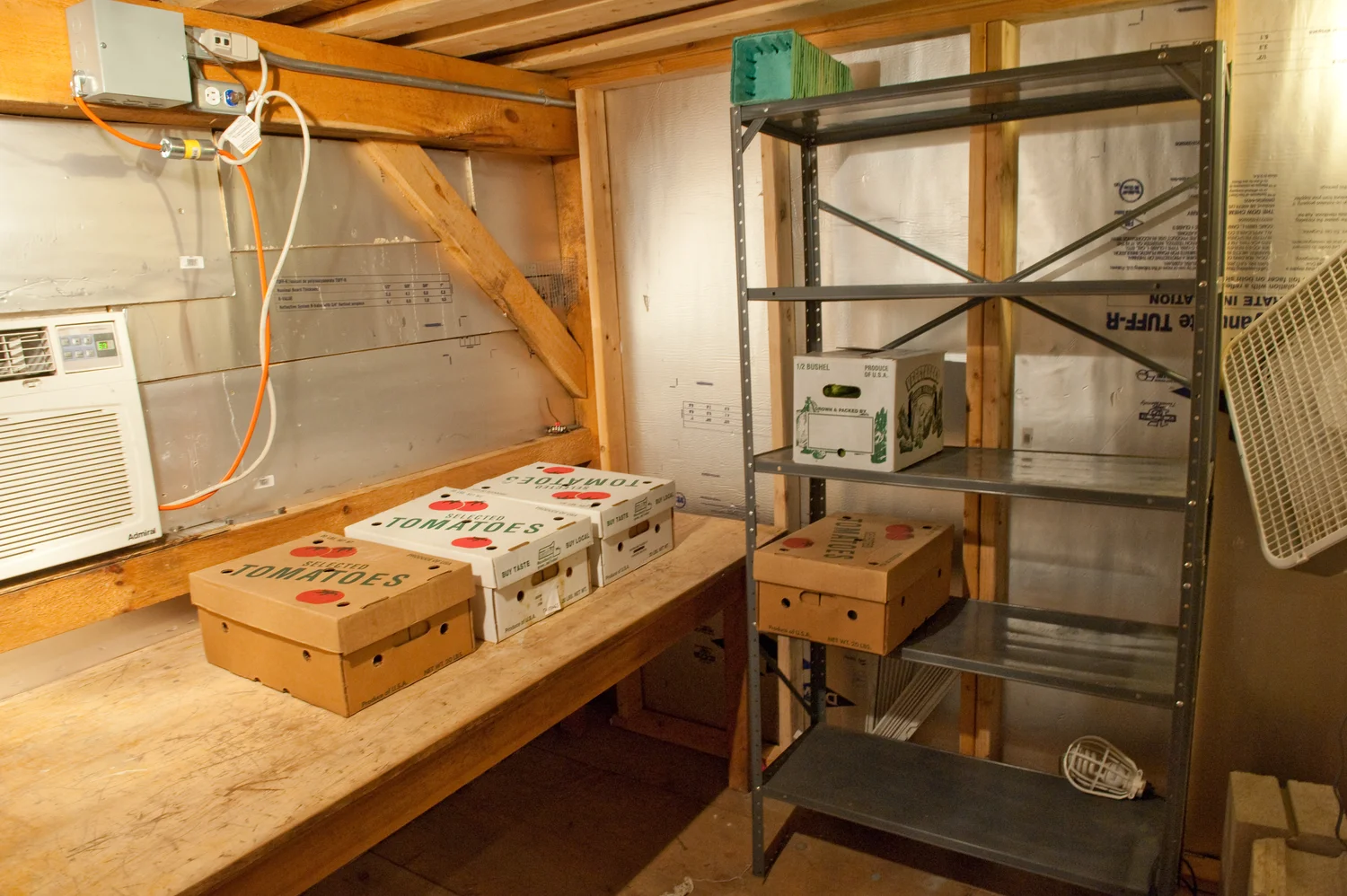
It is possible to walk into a nearly empty cold room and find out that none of it is free. The clear section of the floor has been promised to crates arriving after lunch. Boxes on the left have to be moved near the door for pickup first. On the shelf with one small carton, an entire order will be arranged from shipments that arrive at different times. The distinguishing feature of the room is not the machinery on the far wall. It is the fact that someone knows when the empty places will stop being empty.
A shared cold room lets several operations use a facility they might not have room to build or fill on their own. It can be one part of a food hub, where products from different producers are gathered for delivery to buyers. The USDA’s resource guide describes storage, distribution and marketing as functions that can fit into a hub’s work. The particulars vary by operator. A vegetable grower collecting orders for a small market, a distributor serving several stores and a community food organization can all keep goods cold for some part of the week without having the same reason to use the room. A useful booking system shows which reason governs each stack.
A place is what you buy until you collect
Imagine a small fictional hub that has twelve equivalent shelf positions it can assign. Assigning a position where people actually need to walk would not make it a thirteenth position. Neither would marking a space in front of stored boxes that someone has to reach. For simplicity allocate the twelve positions by whole days and suppose they can be used for the types of goods in this example. There are eighty-four position-days in a week on the schedule. Those days span different parts of different routes. A position on Friday night is worth little to a grower whose crates travel on Tuesday morning.
On Monday, Mira brings in goods that occupy four positions. A van will collect them on Thursday, before the new deliveries. Assignments running Monday through Wednesday reserve twelve position-days for that order. On Tuesday another producer needs six of the twelve positions. Between the two bookings there are only two left on Tuesday, even if the average utilization for the week remains quite low. An invoice that charges by time and occupied size can describe a service more naturally than a flat rental for the week. If it ignores the moments when the facility can no longer take orders, it will capture only part of the value of that service.
Suppose Mira’s van does not come on Thursday. Another arrival was booked on the premise that four positions were coming free. The effect of a delay here is not simply a fourth day of storage at the original rate. Someone may have to change the order of unloading, find equivalent compatible space or move the next arrival to another time. A delay policy needs a way to report changes while there is still some choice. It is easier to deal with a noon phone call before the crates are put in a truck than to do something elegant after both drivers have reached the same door.
The door contributes its own timetable
A room can have open space without being ready to receive a pallet. Imagine two orders coming out on the same morning. If the receiving vehicle needs to use the same area as the pickup vehicle, one shipment has to advance while another waits. Where people wait matters. At some facilities the yard offers room to do this easily; another hub might have a single narrow approach. Making bookings against shelf availability alone can create a queue that is invisible until the day begins.
Work at the door includes giving every parcel an identity the rest of the service can use. A carrier needs to know what to take. The person who updates the list of reserved space needs to know what left. The receivers should be able to tell an early delivery from an order for that day and know what to do with mismatched quantities. The time each transaction takes becomes part of the economic question. A facility with lots of spots can still handle only so many separate changes during a brief staffed window. Scheduling long pickups in clusters may reduce one kind of empty time while increasing the number of staff hours needed simultaneously.
The solution can vary with the driver and the goods. A regular appointment with a predictable size helps the warehouse keep a workable schedule. For a small producer, a very narrow collection window can be costly if travel is uncertain. The facility bears some costs if it offers help on demand; the grower bears some when access is too inflexible. An agreed time band and prompt notice of changes can distribute uncertainty more usefully than a clock everyone quietly ignores. Reviews of late appointments should distinguish an occasional delay from a route that was never likely to arrive on time.
An empty Tuesday is not a free Tuesday
Some costs continue whenever the facility stays open. There is the room, the maintenance arrangement, basic oversight and some power to keep conditions stable. Other effort varies more with activity: receiving extra loads, keeping track of them, getting them out and having someone on hand to solve discrepancies. Some costs change in steps. A longer shift may be manageable until the business has to add another shift or pay for time when an operator would otherwise have done other work. Dividing every bill by the number of shelf positions will not tell you which costs would change if the hub accepted one more order on a quiet day.
Here is one way to think about prices without guessing what a real hub charges. Imagine a choice between billing only for each position-day and billing a modest handling fee for each delivery plus a lower time charge. A producer using one slot for many days might prefer the first arrangement or the second depending on how the amounts are set. If the same producer uses six different drop-offs of very small batches, the second arrangement reveals more of the work done at the door. The arithmetic can serve the business well if everyone knows what the count represents. A surprising new charge applied to a set of cartons after the fact is usually an artifact of poor terms, not a clever way to make the operation run.
Peak time is a separate problem. Spreading part of Tuesday’s arrivals to Monday might create more total useful service without building new space. A longer stay also uses more chilled capacity and might require someone to work at a different hour. The interesting comparison is total work and acceptable pickup times in the two schedules, including what happens to the product. Moving an appointment on a form does not establish that the producer can harvest and load at the new time, or that a buyer can collect earlier.
The list that counts
A simple planning sheet might have one section for reservations and one for the physical stock. Each line should let a worker tell which person or order owns those spaces, what date the spaces were promised, and whether the goods are actually present. Distinguish a provisional booking from a confirmed one. Mark an unscheduled box by the door as unresolved even if it has a name that looks familiar. The plan then offers something more useful than a picture of yesterday: it says which information can be trusted when someone asks to change tomorrow.
Conduct a little reconciliation at a calm time. Compare the spots where the sheet says goods sit with the spots where they are. Compare the day on which things should have been collected to the day the room was actually able to accept the next load. If there is a consistent difference, there is a question to ask before making more shelves. Maybe pickup schedules are systematically stated earlier than drivers can meet them. Maybe clearing the paperwork is where the real delay occurs. Either finding has implications for contracts, staffing and buyers. Neither becomes obvious in a row giving the week’s average occupancy.
A statistic can remain usefully rough. The hub may care more about the number of mornings it turned somebody away and the causes than the exact count of cartons in a fluctuating reservation. Record whether the constraint was a compatible space, rolling access to the door, the expected pickup time or staffing. A room that is full twice a month during a predictable pickup delay will be a different investment case from one that has no compatible space three days a week. The schedule gives that difference a history.
To understand whether a shared facility is working, ask what will happen to the floor space next. If six stacks disappear and nobody is scheduled to use their spot again for a week, the room has surplus capacity at a particular time. If the same six are followed quickly by smaller deliveries, handoffs and prepared orders, the capacity has been used repeatedly without getting any bigger. A cold room can keep its temperature with a thermostat and still fail as a shared service. The calendar is the equipment that makes its second job possible.