When a Shoe Order Comes in a Size Run
A shoe store can have a shelf full of one style and nothing in the size someone came for. Ordering a range means deciding how the pairs will be distributed, not just counting the cartons.
In this story 6 sections
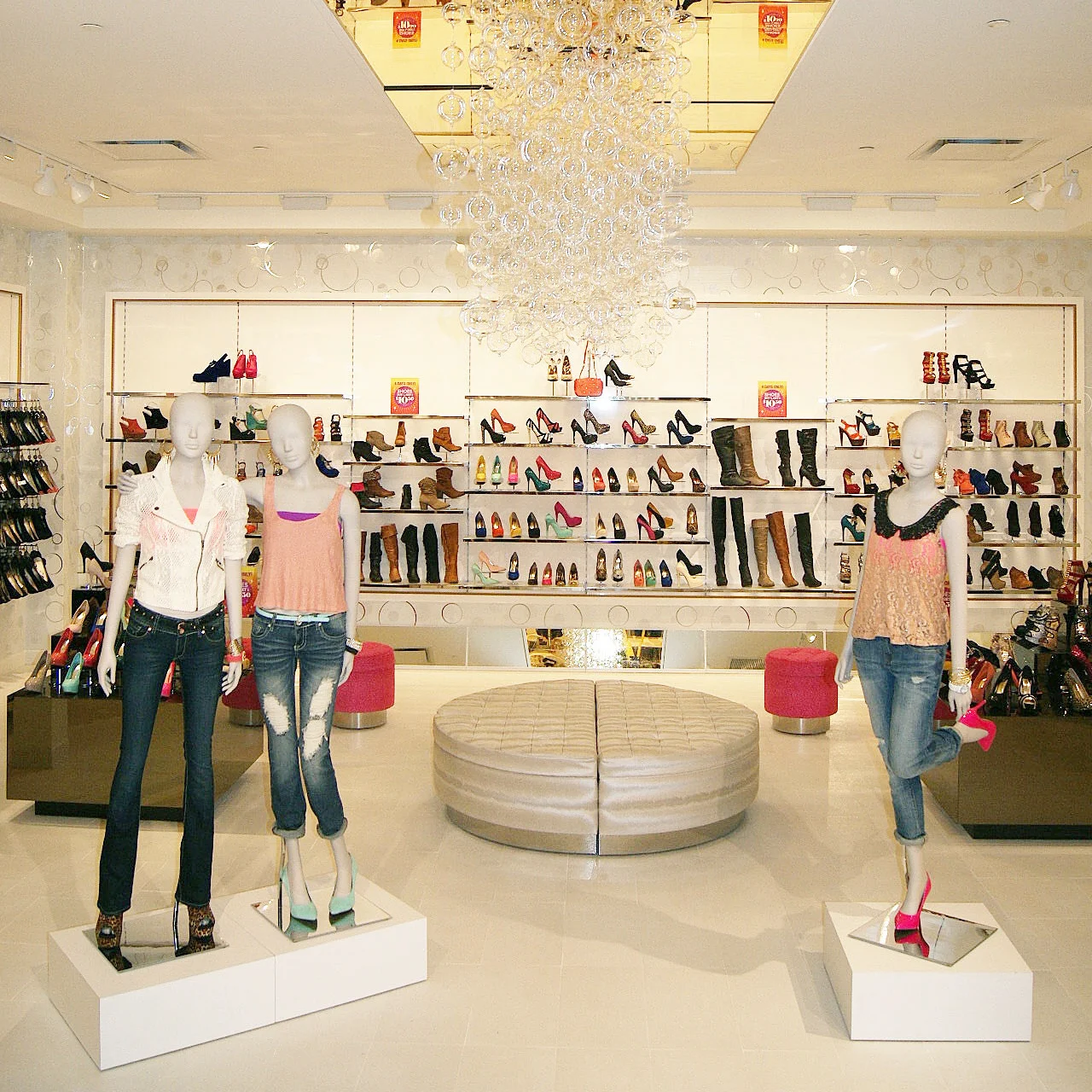
The photo of a shoe display published by Cr.sf.olm shows several designs lined up and presented together. The visible space is mostly used to tell a shopper what the styles look like. Before anyone can walk out with a particular pair, the store has to answer a question the display does not settle. Is the shoe available in the size the person can wear? Two shops could make almost identical displays from sample pairs and have very different answers. The business of buying for the shelf begins with a count of choices within a style, rather than with the display itself.
A size run is an assortment across a range of sizes. It can refer to the distribution a buyer orders or to a particular bundle a supplier is prepared to ship. Those are not always the same decision. The buyer may want extra pairs in certain sizes while the supplier offers a pack with a fixed mix. A visible total of twenty-four pairs is a good control on the quantity invoiced. It is a poor guide to what the selection will look like after several customers arrive asking for the same or adjacent sizes.
The sale is a pair of a specific size
Imagine an order for twelve pairs of a fictional style across five neighbouring sizes. One pack supplies sizes in counts of one, two, four, three and two. Another supplier offers the same total distributed as two, three, three, two and two. Assume for the example that the physical fit, style and other terms are comparable. The second distribution moves a pair into each of the two smallest sizes while taking one out of each of the third and fourth. For a branch whose customers frequently need the third size, the result can be important even though the same number of pairs arrives.
Nor does the ideal mix simply mean a balance that looks tidy on paper. A shop with a particular range of customers might deliberately buy a greater depth in a few sizes. Another might serve visitors whose choices are spread more widely. What matters is the pattern of requests and sales at that shop over time. Staff who see only invoices for the whole style can notice whether its popularity rose or fell, but they cannot use those totals alone to improve the mix. It takes a way to connect each requested or sold pair to the size that mattered in that exchange.
There can be other divisions too. A widely stocked size in one width is not necessarily a strong answer for someone needing another width. A black pair and a pale pair of the same model might occupy separate lines in a store record. Buying enough choices in a style means deciding how many of several combinations the business can keep in stock, rather than asking how many individual shoes fit on the sample wall.
A record of sales does not count every request
A store could sell its last pair in a particular size early in the week. Looking at the rest of the week, a pattern of zero sales in that size would be quite correct. An unwary buyer might conclude there was little demand after Tuesday, even though there was no pair to sell. A size that remained in stock gave customers more opportunities to buy it. Comparing the numbers without any account of availability invites a simple mistake: treating a store that could not make a sale as if it had no chance to make one.
Research published in Manufacturing & Service Operations Management examined what could happen to demand across footwear sizes when one was unavailable. It drew on individual sales and inventory records, which allows a more detailed comparison than weekly totals. Some shoppers might choose another size of a shoe if its fit is suitable. Others will seek a different product, shop elsewhere or wait. No one of those responses must follow every shortage. For an ordinary shop the essential comparison is among requests, periods with stock and sales while the requested combination could actually be offered.
A customer asking what is in stock can reveal a problem the sales receipt never will. If the requested version is unavailable, record the size and product without collecting irrelevant details about the person. One observation is not a reliable forecast. A series of them can suggest where to look, especially if returns or exchanges tell a different story about the stock that did sell. The aim is to see the assortment as customers experience it, in addition to seeing it as a pile of boxes that came in at a certain cost.
A second shipment is a choice about time
A fixed bundle may be a sensible way to start a style when the seller has little local information. Later, a top-up may be needed in only a few sizes. If the supplier can send those sizes alone with a reasonable lead time, the shop can use its earlier sales experience before deciding. If another complete run is required, getting the needed few pairs can mean receiving several that sold slowly the first time. Both purchases can have the same quoted unit price while leaving different proportions of the order useful soon after delivery.
The timing of replenishment matters. A seller planning for a seasonal change might want to know whether buyers of a missing size will have a chance to return while the style remains relevant. A slow shipment can occupy money and space in a later period. An early one can be unnecessary if another delivery is already on its way or if the first store's temporary shortage can be covered from elsewhere. Ask when the missing pair can be offered again and what other items have to arrive with it. The price per pair leaves those questions open.
A transfer between branches can depend on how delivery and returns systems work. One branch might have several in the needed size and a different pattern of requests. Sending one away helps only if it arrives in time and leaves the original branch with sufficient availability. The transfer has work and cost even if the chain has already paid for the shoes. It is worth comparing the transfer with ordering, waiting or keeping stock for the next buyer where it is now.
A full store can still say no
Having many of one design left on the premises might look like a comfortable position. If the remaining pairs cluster in a narrow group of sizes, the store can still lose a variety of potential sales. A buyer can use a small table showing quantity by size and dates of availability to separate a hard-to-find pair from a slow-selling design. A store might then change the shape of the next order rather than adding or subtracting equally across the range.
The question also matters at the end of a period. A reduction on the whole style may help sell the pair that is actually left, but a lower price will not create a size that is not there. Planning promotions from a count of all pairs can leave customers seeing an offer they cannot use. Understanding the remaining mix makes it easier to describe what is available and helps the store decide where more work would be warranted.
An exchange can look like a new sale
Suppose a buyer tries one size at home and exchanges it. There is a new movement of a pair in another size and a return of the first pair. Counting only the outward movements can make two sizes appear to have sold when only one purchase survived. The returned pair might also need attention before it can go out again. The record of the exchange helps the store distinguish what the stock did that day from how many people found something they intended to keep.
Repeated exchanges in one design can lead to a better question about how staff describe its fit, especially when previous orders assumed its sizes would behave like those of a different product. Another design might have quite different exchanges despite sharing the same printed numbers. A routine count organized at the level of a particular style and size can show that difference. It can also help a buyer who wants to change the next assortment decide which evidence came from actual fit and which came from gaps on the shelf.
An exchange record will not by itself forecast the first buying day for a new line. It is useful evidence about how a given set of choices worked when it was possible for customers to try them.
Look behind the sample wall
The shoes in the photograph are arranged to catch the eye. A size run is designed to be available when the display has done its work and somebody asks a much narrower question. The arrangements don't need to look alike. A strong presentation can show the variety of styles in a small area. A useful stock record shows where each style still has a good choice of sizes.
The number of pairs ordered is worth checking against the bill. Keep the distribution alongside it so that a later decision has more to go on. Knowing which size disappeared first or which was never available can explain why a new order should have a different shape even if the shop has exactly the same amount to spend.