The Date a Trade Invoice Comes Due
A supplier can deliver today and receive cash next month. The invoice date, agreed due date and actual receipt belong on three distinct lines in the business record.
In this story 5 sections
A ceramics supplier delivers a small order to a shop on Tuesday. The cartons are checked before closing. The shop now has bowls to put on a shelf, and the supplier has an agreed price to collect. In this fictional example the shop does not pay on Tuesday. The parties already agreed to settlement later. For the supplier there is a gap between completed delivery and available money. Last week's costs do not necessarily wait for it to close.
Terms for payment are a way to define part of this gap. The UK's Office of the Small Business Commissioner explains that businesses can agree when invoices are to be paid. Its guidance is jurisdiction-specific. The dates and sums used here are invented to show the effect of a particular agreement rather than a default rule. The important distinction is between when the goods move, when payment is supposed to occur and when it actually reaches the supplier.
Put the date beside its event
Suppose the bowls are delivered on March 3. The supplier issues an invoice the same day, and the shop confirms acceptance on March 5. Assume the parties' particular agreement says that the amount is due thirty calendar days after acceptance. Then the example can list the due date as April 4. If the period instead began with issue, thirty days after March 3 would be April 2. Both parties could write 30 days on a worksheet and still expect two different dates. Stating the event from which counting begins is what makes the phrase useful.
There are other timing choices, including terms based on a month end or a schedule of partial payments. A short email containing the due date or a clear named rule helps avoid a later reconstruction. A due date must still be read with the actual agreement and applicable requirements, especially when a day falls during a holiday or records disagree about acceptance. In the fictional case nothing further alters the calendar. The exercise only shows how the two day shift in start can change the end.
Finally record the date of receipt. A promise to pay on April 4 is one kind of information. A remittance notice or an actual credit identified in the supplier's accounts is another. If the money arrives on April 7, April 4 should not vanish from the record. One date can help calculate what should have happened; the other confirms what did. Maintaining the difference is useful to both a supplier asking about the invoice and a purchaser reviewing when money was sent.
A paid bill and a cash forecast describe different things
Assume the supplier billed 600 dollars under the example and spent 380 dollars producing and packing the order in the weeks beforehand. Those invented values are not a complete statement of profit. They help to show that preparing the order can take spending well before money from the customer is available. A business making a forecast should record the likely receipt at the expected date and record payments when they have to be made. Treating the sale as if it replenished cash on delivery can make another order appear easier to finance than it actually is.
The buyer can see the same interval from another direction. It has goods and a payment to make later. If several bowls sell quickly it may have some receipts before the invoice is due. If they do not, the commitment is still present on its own terms. Holding stock is not equivalent to having money in the account. Both businesses can benefit from knowing the schedule even though they stand on opposite sides of it.
Put two such orders close together and the difference can become more visible. Production for a second order may be paid for while the first invoice is still open. The fact that both orders carry positive expected receipts does not prevent their costs from overlapping in time. A weekly cash view can be useful in that situation, provided it lists actual or forecast settlement dates rather than only adding up orders that have left the building.
To make that overlap concrete, suppose the second order needs another 300 dollars before the end of March. If the only customer payment under discussion is the first invoice due in April, that first receipt does not cover the end-of-March need at the moment it arises. Describing both orders together as profitable would not change the sequence. The supply shop can list the date and amount of the demand for cash without immediately assuming which arrangement should cover it.
Forecasts can also distinguish expected and confirmed dates. A receipt anticipated under agreed terms belongs in a plan, marked as anticipated. A receipt already matched to the correct invoice belongs in the completed record. If actual receipts repeatedly differ from expectations, keeping the original expectations visible helps someone recognise the pattern. Replacing the old date after each payment would erase the comparison.
Stay with the invoice when part of it changes
Imagine that two bowls were chipped and the parties agree to reduce the amount after delivery. A replacement might be sent or a credit might be issued, depending on the agreement. A system that simply marks the whole transaction in dispute can make the fact of a small disagreement visible and obscure the remainder. A useful record says which amount changed, who confirmed the change and what due date applies to any balance under the current arrangement.
Suppose the fictional 600 dollar invoice is adjusted by sixty dollars, leaving 540 dollars. If the shop sends five hundred before the due date and promises forty later, the original invoice, credit and actual receipts are distinct lines. Recording only invoice: paid could lose the balance. Recording only the original amount as overdue would miss the adjustment and partial settlement. The economic work here is modest but consequential. Someone has to make the state of the payment legible to another person from the records alone.
A seller can make a correction faster when the purchaser has the invoice number and order reference to hand. A treasurer matching money received to invoices needs enough detail to avoid attributing an amount to the wrong order. This is one reason a record that looks repetitive can be doing useful work. The same identifier can travel through a delivery confirmation, invoice, correction and bank reconciliation, while the amounts and purposes change around it.
Read an unpaid list by age and cause
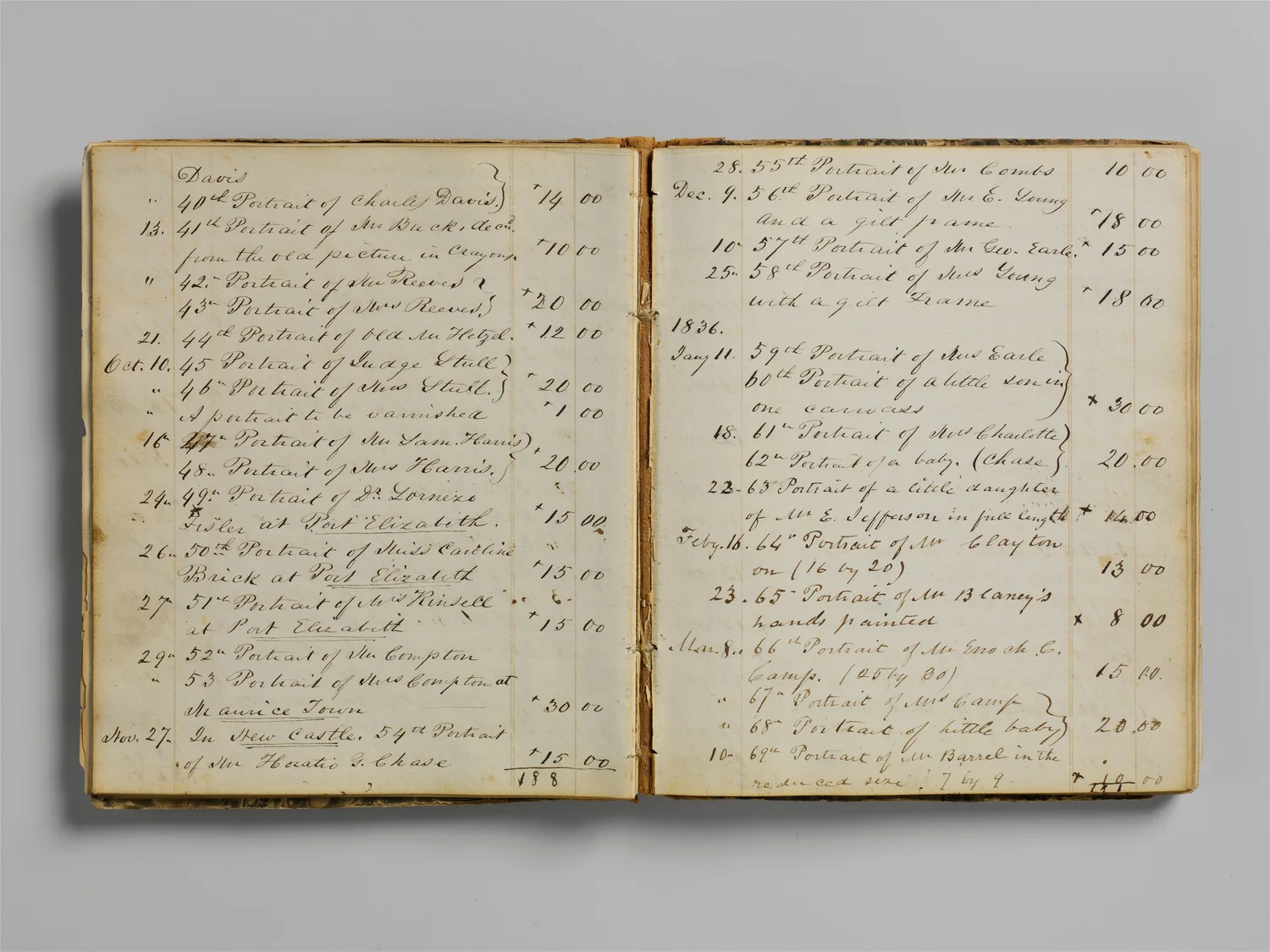
An account book can gather amounts, dates and names in one place. The historic ledger in the cover photo belonged to John Carlin, according to the Metropolitan Museum of Art. It is evidence of a book made for recording accounts. It does not document the fictional supplier, and there is no need to read a modern credit agreement into its handwriting. It gives a material contrast with a modern system where an operator can change the displayed order of a list immediately.
Sorting an unpaid list by due date is useful only if due dates have been captured consistently. An invoice due next week, one sent to an incorrect address and one overdue after acceptance may all appear unpaid today. The appropriate responses can differ. One belongs in a forecast. The missing document needs to reach the responsible person. The overdue one may call for follow-up through the agreed process. Each deserves a status with a reason rather than being grouped under the same flag.
Two organisations can improve that record by identifying who receives invoices and who can resolve discrepancies. The person ordering bowls may not be the person handling payments. An email asking only whether a payment is on the way can produce an answer that is hard to put in a forecast. An inquiry with the precise document and amount can establish whether the invoice was received, approved or paid. A real dispute should be handled under the applicable terms, not settled by examples on an editorial site.
Give the payment date a place before agreeing the delivery date
A partial payment requires the same discipline on the forecast as in the invoice file. Put each expected receipt in the period in which the agreement calls for it. That makes it possible to revise one line without silently moving the entire amount. Save the reason for the change with the record.
The best time to find an undefined date is when the parties are deciding what the order means. A price, delivery window and payment trigger can be recorded together. If more than one trigger is used, such as an advance for materials and a later instalment, each deserves its own amount and event. That creates an account that another worker can read without borrowing the memory of people who first spoke to the customer.
The point of the three-date comparison is evident at closing on Tuesday. The shop sees its newly delivered bowls. The supplier can identify a completed delivery and an open amount. Later both can compare the agreed date and receipt without mistaking the first invoice for the end of the matter. An order can be finished in the workshop and still have a financial step left to take. A precise date tells the next person when that step is supposed to happen.