The Gap Between Two Runs on a Line
A production line can finish one order long before it makes the first acceptable piece of the next. Measuring that interval reveals which preparations and checks use the changeover window.
In this story 5 sections
The last correctly labelled container for one order goes into a carton. Another order is waiting for quite similar containers, but it has a different label and perhaps a different package. On the schedule the next row begins when a worker moves a marker or the clock reaches a line. On the actual floor, the next acceptable piece has to wait for adjustments, materials and a check. The difference between those two beginnings is the changeover. It is time somebody has planned to use even though there is no completed unit from the second order at the end of each minute.
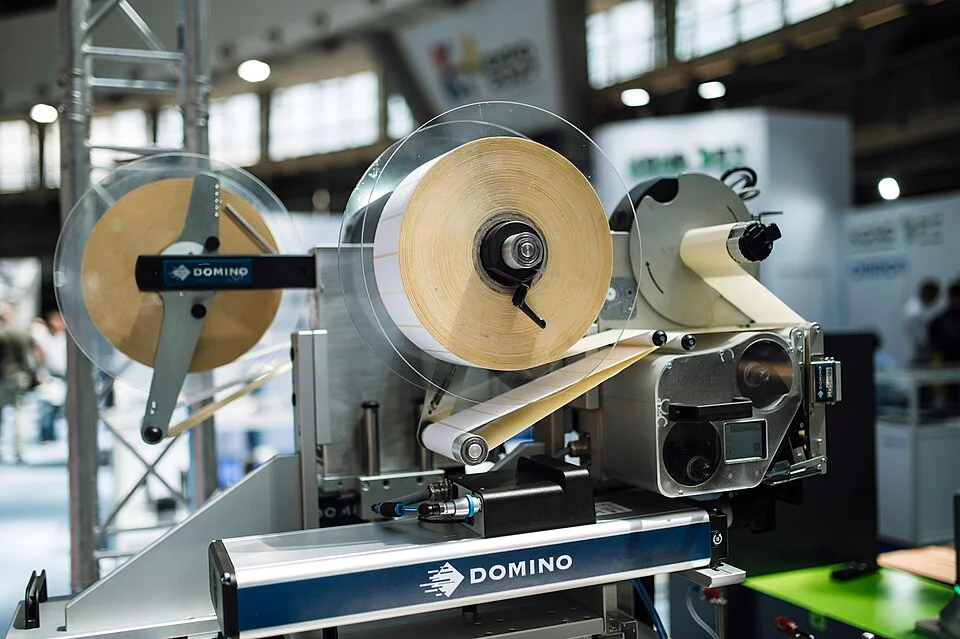
NIST's Manufacturing Extension Partnership describes changeover measurement in terms of the interval between the last good piece of one run and the first good piece of the next. That definition has a practical advantage. It does not stop the clock when the equipment starts to move again. It stops at a result capable of going onward under the applicable checks. A label applicator displayed at a trade show, as in the cover photo, helps make one piece of the job visible; it is not evidence of the time or procedure on any particular production line.
The interval needs two observed endpoints
Take a fictional packaging line. A last acceptable unit from one run comes off at 10:02. The next order begins producing test pieces at 10:24 and its first accepted unit comes off at 10:31. Under the last-to-first good definition, the gap is twenty nine minutes. A timer stopped at 10:24 would count twenty two minutes and miss the part used to establish that the new output was ready. Both timestamps can be useful, as long as they are not assigned the same meaning.
The word good needs a definition too. The next part is useful when it meets the relevant acceptance requirements, not merely when it appears on a moving belt. In the example it might have to carry the right label in a properly identified place and pass checks specified for the actual work. An observer should use the site's own acceptance record and procedure. Changing the measurement to count earlier parts as good would make the reported gap look shorter without changing when the order was actually ready.
Two runs could share materials and still differ in setup. A move from one colour or package design to another can involve new packaging, a confirmed version and other work. A change between orders of the same design can have less to prepare. Gather the kind of transition as part of the record. An average of twenty nine minutes across unrelated changes is not evidence that the next pair of orders needs that exact amount of time.
Where the clock runs and where people work
Some preparation can happen before the old run ends, subject to a site's safe procedures and quality controls. Materials may need to be brought to an approved staging point; staff can check that the correct work instructions are available. Other actions require the line to stop and be handled under the appropriate procedure. Keeping those categories visible can reveal why an observed gap is longer than expected without assuming every part of it can be moved earlier.
For instance, in a fictional sequence five minutes are spent waiting for a confirmed label version before the new run begins. If the responsible people can resolve that information safely in advance, they may reduce the waiting inside the changeover window. The confirmation has not ceased to require work. It has changed location on the clock. An account that counts only stopped equipment will show improvement while a staffing review may still need to consider the time used for preparation.
This is a particularly useful distinction for a manager who wants to improve a schedule rather than hurry the worker. Measure the sequence and identify why each wait took place. Was the right material already available? Was the machine ready but a required check not yet possible? Was the original estimate based on a much simpler change? Each answer defines a different problem. A useful improvement preserves the checks and safe boundaries that make the first output acceptable.
Repeated short runs can make the gap more visible
Suppose the fictional line has a shift of eight hours and can otherwise run steadily. Four changes at about thirty minutes each would account for roughly two hours of the schedule, before other constraints are considered. A day with fewer changes might give the line more time to produce. That does not by itself establish that it should run only large batches. A long run produces inventory that might have to remain unused, while a smaller batch can serve a nearer demand. Both quantities and changeovers belong in the scheduling conversation.
One way to compare plans is to keep the number of transitions as an explicit input. Another is to record the sequence because consecutive orders differ. If two jobs can use the same setup, grouping them may be convenient. If they are owed at different times, grouping can create a different problem. The decision needs information about due dates, buffers, capacity and the requirements of the actual process. A short setup time is valuable because it can open choices, not because a machine in motion is the sole goal.
The count of good units should stay beside time in a review. A change that appears quick can create more rejected material or later rework if its evaluation ends too soon. A slower observed acceptance can reflect a new check intended to prevent an expensive error. The event a producer wants to improve is the change from one usable output to another, not an isolated statistic for how soon the belt moves.
Save the reasons for a long interval
Once two stages are named, it becomes easier to see when they can be studied separately. The first motion after a setup can be observed directly. Approval of the first acceptable item may be recorded by another person at a separate point. If the production log counts starts and the quality log counts accepted pieces, line up their clocks before comparing. Otherwise a difference attributed to the process may partly arise from records taken on different time bases. Use a common order identifier so a sequence from one job is not accidentally attached to the next.
A pair of short measurements can show where a possible improvement would matter. Suppose a fictional line spends seven minutes of its twenty-nine-minute change waiting for approved labels, then another period producing and checking sample pieces. If bringing the confirmed labels to the right point earlier removed five minutes of waiting without altering anything else, the observed gap could become twenty-four minutes. That is not a promise a change will work. It is a testable consequence bounded by the conditions of the example. Compare after running a truly similar transition rather than using a day with a simpler label or an already completed check.
Time made available still needs a job
If an improvement saved five minutes on four changes in the example shift, that would make twenty minutes available inside the same shift under its assumptions. One possible benefit would be extra time to meet a short order. Another might be creating more room for ordinary delays without missing planned deliveries. The business will not necessarily turn all twenty minutes into paid output. Material availability, another station or a shipping deadline may still constrain what can happen. State the effect observed rather than translating every saved minute directly into revenue.
The same care is useful when parts of a setup can happen before the line stops. A different role may need to be available earlier. Confirm the staffing consequences and keep all required procedures intact. Saving time on the machine while adding substantial preparation elsewhere could still be worthwhile if the machine is the constrained resource. The records should be able to show both changes. The business wants to know whether work was eliminated, moved or made more predictable.
A single change can be documented with a small time line: last good item, start of setup, point at which material was available, restart, first accepted item. Include variation relevant to the next job and leave the formal process checks to the people responsible for them. The record will help somebody compare like transitions rather than assume that all work between two rows was spent at the same station.
A person reviewing the report should be able to separate a wait from an action. Waiting for a part or an answer calls for a different question from performing a necessary adjustment. It is also possible for two things to happen at once. Adding their elapsed times blindly can put more than a half hour of work into a twenty minute gap, which may be true as person-minutes and false as elapsed time. Giving those quantities separate labels keeps the comparison useful for reducing line interruptions and planning labour.
The sequence ends with the first acceptable item, so the best review begins there and works backward. Identify what made that item ready. Locate where the necessary information and materials first became available. Only then ask which parts can be made easier to arrange next time. The little gap on the schedule is a period full of work. It makes more sense when the next usable piece defines its end.