What Waits on a Purchase Order
An order, a delivery record and an invoice can describe the same shipment in different quantities. A small example explains why making them agree takes a little investigation.
In this story 5 sections
A small shop orders twenty-four desk lamps. A box at the door contains eighteen. On the same morning an invoice appears for twenty-four lamps. This might sound as though somebody made a mistake. It might represent a perfectly normal first delivery with the rest due later. It could even be uncertainty in how people counting the lamps described the package. The mistake would be to assume every piece of paper was made to count the same thing at the same stage and pay attention to whichever number appeared last.
In a conventional purchase, the order documents what the buyer wants and the terms on which it is being ordered. A receiving record documents what reached the buyer and, where appropriate, what was accepted or needs attention. The invoice states what the supplier is charging. Different businesses have detailed rules for creating and reconciling these records. The simple difference you need to keep is that none of them automatically supplies the other two. A neat invoice cannot establish that all the lamps reached the shelf.
Begin with the version of the order that suppliers received
Suppose the fictional shop ordered twenty-four lamps at $8 each. Its expected amount is $192 for the lamps before any other agreed costs or taxes. If it originally drafted an order for eighteen and later authorized twenty-four, the two versions should be distinguishable. The supplier should be able to find the applicable revision. Otherwise a shipment for eighteen might match the supplier’s copy and fail a comparison on the buyer’s side, even if everybody set out to supply what they believed was asked for.
Look at how each item was described. A shop that uses the same short name for several lamps can identify completely different products from a supplier that has different stock codes for each variant. Put the known item and unit on the order. Twenty-four pieces and twenty-four multipacks are not identical orders. A three-way comparison of matching numbers will not help if the clerk who receives them has never been told the unit those figures count. Comparing against the expected item also matters where a replacement can satisfy the function but was not what the buyer actually approved.
Sometimes the useful line on an order is not the number. A requested arrival date, delivery address or packaging requirement can matter to the buyer. Think of a business planning to sell the lamps as part of a display put up next week. If it receives all twenty-four at a different branch and has to move them later, the count can agree while the shipment still creates unexpected work. A matching check has a scope. Describe it as one way to test an intended transaction rather than proof that every other promise was fulfilled.
Receipt is an event, not a document name
Picture a delivery driver leaving two boxes with a packing slip. One worker records they were received. Another checks the boxes and counts eighteen lamps, two of them visibly damaged. Many firms have different systems for recording arrival, inspection and acceptance. Note which count is being recorded before using it in a comparison. Eighteen could describe what was physically present, while sixteen describes what was accepted for use under the arrangement. A note that just says “received” can leave this distinction unresolved. The appropriate basis for handling the invoice depends on the business’s terms and procedure.
Now imagine the rest of the lamps are not meant to arrive in the same consignment. Record that expected delivery separately. Compare the amount documented as delivered so far with the portion invoiced so far. Depending on terms, a partial shipment may be accompanied by a corresponding partial invoice, or payments may be scheduled differently. Do not create a correction merely because a full order and a partial receipt contain different numbers. First establish which goods, shipment and period each comparison is meant to cover.
There is often a useful date next to a discrepancy. If an invoice arrived yesterday but the goods were counted today, what looked different at a morning check might agree by the afternoon. On the other hand, if the wrong color arrived, the passing of a day will not fix it. A short note can separate a matter of timing from a part that knowingly differs. That saves repeated work. Everyone looking at the same invoice can see whether someone is waiting for a later event or investigating a condition that already needs a decision.
Match the lines before comparing the totals
Accounting systems sometimes distinguish a two-way comparison of the order and invoice from a three-way comparison that includes receipt. Oracle documents those approval options for its procurement software. The details and tolerances of a particular installation can vary. The concept explains a familiar type of confusion without requiring anyone to adopt the particular software. Two documents may agree on what was ordered and what a supplier charged; the goods can still be someplace other than where the buyer expected them to be.
In the fictitious lamp example, if eighteen acceptable lamps are eligible to be charged at $8 each, that portion would be $144. If a later receipt brings six qualifying lamps, the remaining portion would be $48. Both add up to the $192 goods line assumed in the order. If an invoice lists twenty-four at $8 and also carries $16 for delivery, the question about the $16 is separate from the quantity still on the way. Compare it with the agreed terms. Posting a difference simply as overbilling without identifying which line changed can make a real discrepancy much harder for the supplier to investigate.
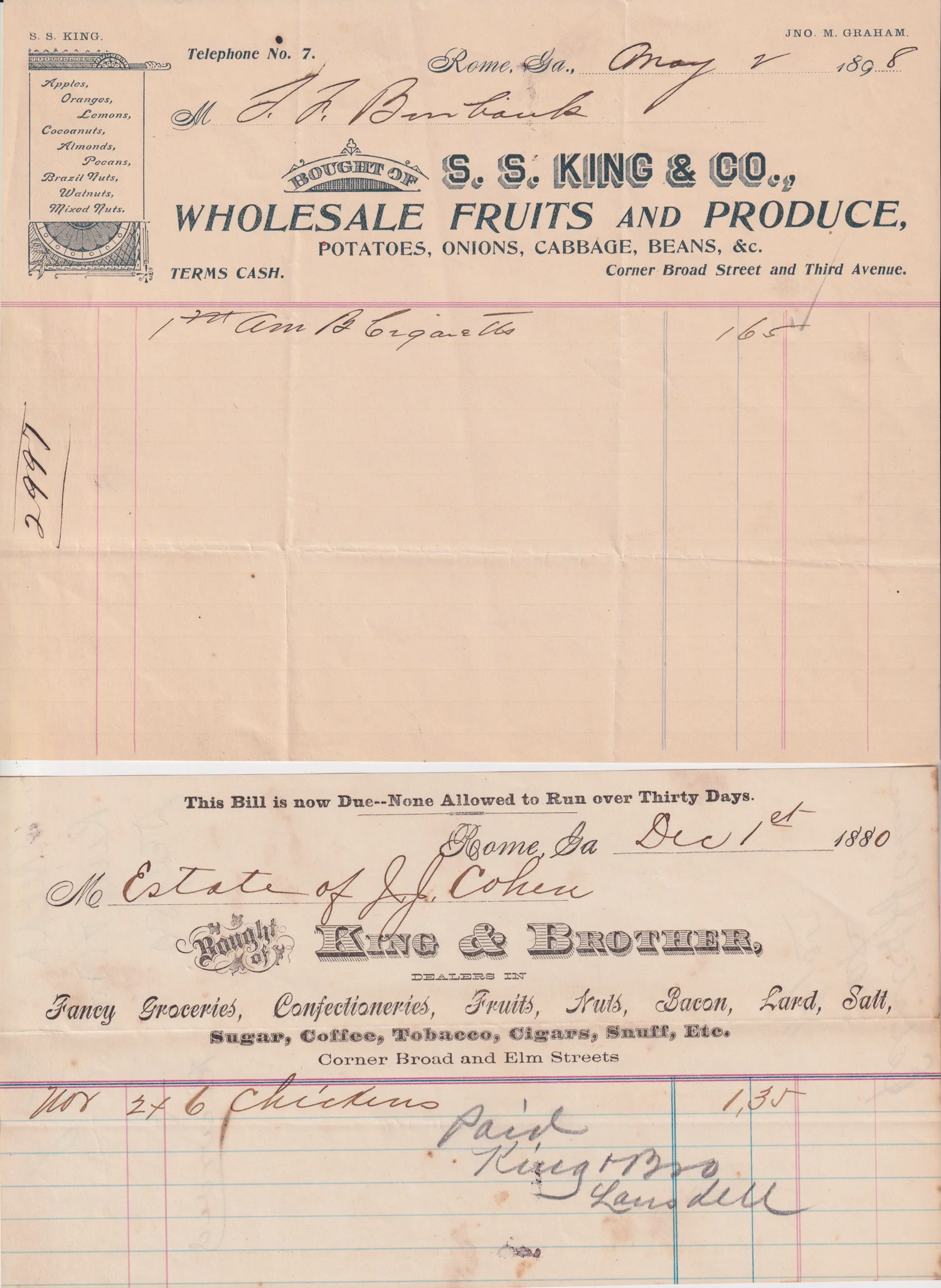
The invoices in the historical cover image show a durable idea: a seller identifies goods and charges on a record another person can read later. They are not pictured beside the orders or receiving notes that a current matching process would use. The record makes its own kind of evidence available. It lets you ask what was charged in a particular transaction, without making it possible to infer everything that crossed a warehouse or shop threshold.
The documents do not stop when goods go back
Take a delivery whose count genuinely matched, but in which the buyer later identifies damage under the terms of the purchase. The person arranging a return needs to know whether the supplier will send a replacement or change what the buyer owes. Receiving an item back somewhere does not necessarily credit the invoice automatically. Record the item and quantity, when it left, who acknowledged it and what settlement or replacement is expected. Without that information, a later invoice could look as though a second purchase had been made when work is still underway to resolve the first one.
The exact same discipline applies to a smaller discrepancy that causes no physical return. It is sometimes necessary to record a credit next to an invoice rather than rewriting the invoice someone already sent. The business needs to preserve what its partner issued and what eventually resolved the matter. A missing link between the two records can make both seem valid in a list of unpaid amounts. An order number, original invoice reference and actual item line give the records a way to find each other.
Try explaining the case to someone who has no access to the boxes or the supplier’s memory. In two or three sentences they should be able to say exactly what is still outstanding and whether the next step belongs to the buyer or the seller. A large file of attachments cannot substitute for that bit of orientation.
Decide which difference is still open
Use a small record next to the underlying documents. Identify the agreed order or revision, the quantities relevant to this invoice, what has been received or accepted and what remains unresolved. Make the difference intelligible to the person who can handle it. A supplier may need to confirm prices. A receiving desk may need to check whether another package is waiting. The buyer may need to clarify a change that was recorded in one place and not sent to another. “Please fix invoice” gives each of these people too little to do good work.
A tolerance can help a process avoid repeatedly stopping for inconsequential differences within acknowledged limits. It is meaningful only for the differences the procedure intends it to cover. An amount that happens to cancel another amount on a different line should not be declared harmless from the final total alone. If an expensive item is billed at the wrong quantity and an unrelated credit offsets it, a neat sum can actually make the problem harder to see. Keep the issues tied to their lines until the responsible people have made the appropriate decision.
On the next morning the last box of lamps might arrive. The supplier’s bill need not become a new document when a buyer can finally record that receipt against the proper order. Or the mismatch may turn out to require a corrected charge. In either case a record matching three distinct histories gives a better account than a theory that one dated piece of paper was always right. The purchase moves from promise to delivery to payment at separate moments. The documents let the business see precisely which moment it is still waiting for.