The Price of the Display Model
A showroom sample has done one job before it is sold. Its price, condition and collection terms explain what changes when the thing people tried becomes the thing a customer takes home.
In this story 6 sections
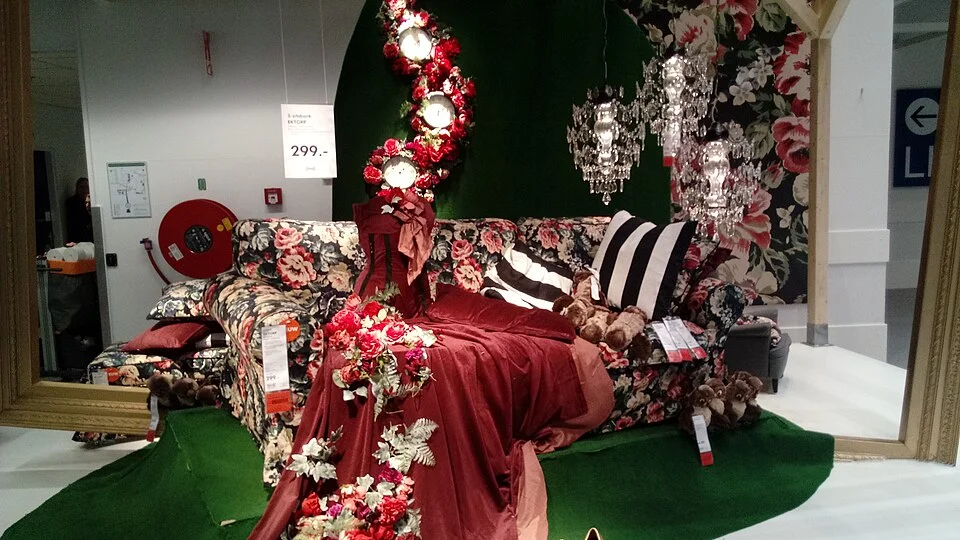
The sofa in Donald Trung Quoc Don’s photograph stands fully assembled on a showroom floor in Groningen. A buyer can see its shape and how it sits in a room without having to unpack anything. That sample can help sell many units of the same line. The eventual transaction becomes different if the store offers the assembled sofa itself. Its work as a sample may already have finished, and a customer can inspect the exact item they might take. The product name stays familiar while the thing being sold acquires a history that a new boxed unit may not have.
The photograph documents a display. It does not show that this specific sofa was sold, what its condition was when it left the floor or what anybody paid for it. The economic question remains useful. A store can use an object to show a design for a period of time and later offer it as one particular object, with a price and conditions that recognize the difference. The opportunity for the buyer depends on what is included and how the sample needs to be collected as well as on how large the reduction looks.
Why the sofa was useful before anybody bought it
Imagine a furniture department with one model on the floor and several boxed units in storage. The sample allows customers to see the fabric, sit on it where permitted and consider its scale against surfaces they recognize. A buyer who chooses it on the basis of those observations may receive a different unit of the same line. The time between assembling the display and making that sale is not idle. The sample has been doing part of the work of explaining the product.
Eventually the store may want the space for a different size or colour. It can retire the original sample even if sitting on the original remains perfectly possible. A change to what the shop wants people to see is not evidence that the former display is defective. The opposite inference is risky too. An item assembled on the floor can acquire wear, fading or a missing accessory while it is doing its job. The current state of an individual thing has to be established for the buyer rather than inherited from the original specifications of its design.
This is why a shop could have both an ordinary price for new stock and another price for a former display. Each figure concerns a different set of expectations. The second buyer may be able to inspect the very item they will get. They may also have to accept something specific about that item's condition or collection. A useful reduction is identified against the right point of comparison, not a discounted percentage on a sign with all the other terms assumed.
Look for which parts and features belong to the item
IKEA's US service information says that As-Is selections can include former showroom displays and describes using a tag to identify condition. It also says selections vary. That practice is a good source for thinking about what a description can make clear. It doesn't establish the terms of a store outside that market or the history of the sofa in the image. A useful tag goes beyond the model name and lets a buyer check which of its present properties are important to them.
Consider a chair whose fabric is visibly marked near the bottom. For someone planning to cover it, the mark may not be consequential. Somebody who wants the same appearance as a second piece can care a lot. For another chair there might be a scratch that is less interesting than the absence of a removable cushion or a fitting used in the intended setup. A buyer can compare two indications separately: which features the design is supposed to include and which ones this actual unit includes. A complete-looking display can still have an accessory that belonged to its setting rather than to the item for sale.
An item that has never left the floor might have a different position with respect to accompanying parts, packaging or documents from one delivered to a customer and subsequently returned. A tag can identify observables without making the two routes to the sale impossible to distinguish. Someone considering the price should ask for clarification where the difference would affect transport, installation or other use. The fact that more than one sort of item can stand in the same sale area is a reason to rely on the description for the specific thing being offered.
The price of the room and the price of the item are separate
Suppose a store has one display taking up space intended for a new item next week. The sale does two things for the store. It earns something for the old sample and releases the space. A business deciding how long to keep the sample can compare the chance of a later sale with the cost of waiting to use the area. That is a store decision. A buyer evaluating an offered sample has a different question: whether they would like this item, in this condition, on the practical terms attached to it. The same price can be based on different considerations on either side of the counter.
Avoid treating every other customer as the competitor for an item without first identifying whether there is more than one at the price. A display sample can be a single unit, whereas stock of a new product may come from several locations or be replenished. That changes what happens if somebody later asks for an exchange or another matching unit. Any such terms need to be clear for the actual transaction. A standard brochure can explain the design; it cannot make the availability of a distinctive already assembled unit repeatable.
A shop deciding whether to hold a sample might also have to plan where it goes between the point of agreement and collection. The customer's pickup arrangement can determine how soon the store frees the floor. A price that looks as if it was set only by wear may also be part of an offer whose timing makes it useful for the store. There is no need to guess which factor determined any real sticker. The valuable comparison is among the conditions people can actually check.
Add the route to the other end of the sale
In a simple hypothetical comparison, say a boxed version costs 500 abstract units and an assembled display costs 390. A buyer would see a difference of 110 before delivery and other terms. If collecting the display requires a separate service costing 80 units while the boxed item can travel with an existing delivery, the comparable saving becomes much smaller. Someone with a suitable way to collect it may face a different comparison. The arithmetic is a reminder to include the work the sale assigns to the buyer, not an estimate of anyone’s real price.
There are also questions before the first kilometre of transport. Will the assembled thing leave the store in the form seen on the floor? Does the intended place of delivery have room for it along the entire approach? A new item arrives in its specified packaging and may require later assembly. An existing display can save that part of the work or create a different handling problem. Treat the completed size and the planned delivery form as separate facts rather than assuming assembly always makes a purchase easier.
Make the pickup describe the same object
There is a small handoff after the showroom decision. A floor associate may know which cover was on the sofa, while the person collecting it later may meet an employee who only has an order number. A useful receipt describes the actual piece, including any parts to be picked up separately, well enough that a second employee can identify them. If the store is holding the object for another day, ask whether it will stay assembled and where to go to collect it. Those details affect whether the chosen transport will work.
This is particularly useful when a room display is being changed. Two similar pieces can pass through the same place in a single day. An item number identifies a product design; a separate stock tag or a note on the order may identify the display unit a buyer inspected. Record whichever form the store actually uses. It makes the conversation at collection about a particular piece of furniture rather than a color remembered from a room that has since been reset.
Keep the reasons for choosing it
The sofa in the photograph did a clear job just by letting people see one design in use. In a future sale of such an object, its condition, included parts and arrangements for moving it have to help someone make another kind of decision. One person may find it useful at a given price, while another needs the predictability of a different unit. Neither can read the full answer from the ordinary price of the boxed model.
The best question is whether the comparison describes the two things as they will actually arrive. Include what is present, which work comes with each offer and which choices the buyer will make later. At that point the size of the reduction has an intelligible role. It can be weighed against a real set of differences instead of an attractive photograph of a sample on a well-prepared floor.