Read the Other Number on a Shelf Label
The amount due at checkout and the price per unit tell different stories. Compare like quantities, then consider how much of each package you will actually use.
In this story 8 sections
Two bags of oats stand next to one another. One costs 3.20 for 500 grams. The other costs 4.50 for 750 grams. The smaller bag is easier on this trip’s budget. The bigger bag costs less for the same amount of oats. Neither fact settles the purchase without some additional information about the buyer. Getting the calculations straight makes it much easier to find out which information is missing.
Put the amounts on a common scale
The first bag costs 0.64 per 100 grams and the second costs 0.60 per 100 grams. If a shelf tag expresses one price per kilogram and the other per 100 grams, make the denominators match before comparing. Six per kilogram and sixty hundredths per 100 grams express the same rate. A label that uses price per item can be useful for eggs but is less useful for two boxes of biscuits containing different sizes of biscuit. Find out what the stated unit does and does not count.
Look at whether the comparison is based on weight, volume, usable or drained weight, count, or a serving chosen by the producer. Two products sold in jars may have the same gross weight but different amounts of solid food. A concentrate can appear expensive per millilitre and cheap per litre when prepared. Comparing a ready-to-drink bottle directly with the concentrate answers a question about packaging rather than a question about cost to use.
Include the food that makes it to the table
The large bag in the example buys an extra 250 grams for another 1.30. If all of it will be used, the unit rate is better. If a buyer expects only 600 grams to be usable before moisture or spoilage makes the rest a loss, the practical rate is 0.75 per 100 grams used. That is higher than the 0.64 in the small package. Nobody needs to calculate an exact spoilage forecast in the aisle. A rough value can identify cases where a small unit price difference is easily erased by leftovers.
Make a separate decision about cash. One person might have cupboard space and a reliable cooking routine but lack the extra 1.30 until next week. Another might be able to buy two large bags and share them easily. A comparison method becomes more helpful when it acknowledges that the cheapest future supply and the most affordable trip today are two different things.
Promotions change more than one number
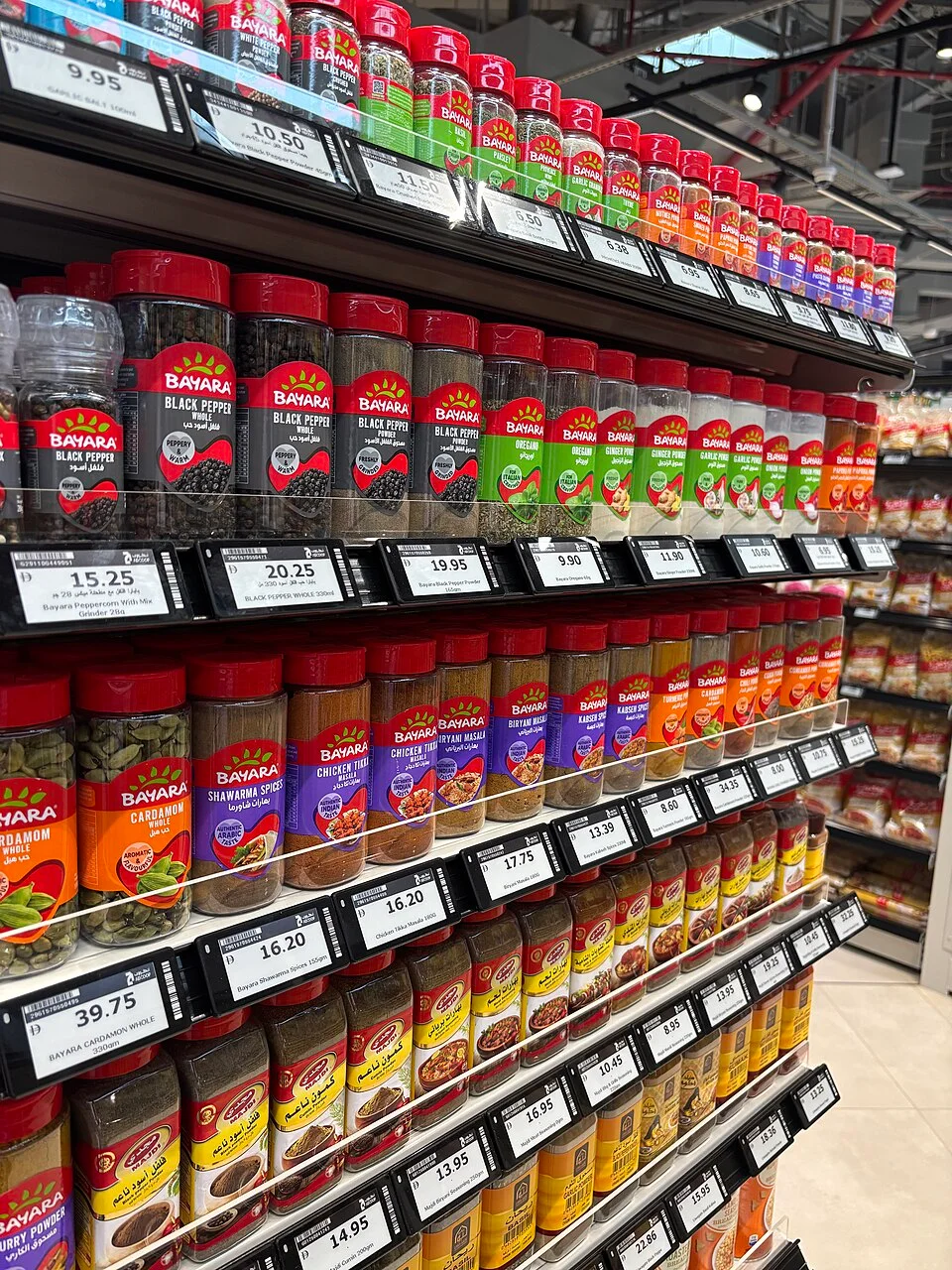
A discount available only when buying two packages changes checkout cash, the unit rate and the amount that needs storing. Check that the price applies to the size in front of you; a similar package can sit beside the offer. An electronic tag can make the price easier to update, but it does not make every offer unconditional. The small print may tie it to a membership or a particular date.
Work out what the discount asks you to do
Imagine two bottles offered at 2.40 each, with a second bottle half price. If you buy two, you pay 3.60 or 1.80 on average for each. That is a saving of 1.20 against buying two at the regular price. It is an extra cost of 1.20 against buying one at the regular price. Both statements are true, and they refer to different comparisons. Fold the offer tag in half with your eyes: on one side is the price for doing what you meant to do; on the other side is the price if you do something more. If you were already going to use two before they expire, the extra quantity may fit. If the second bottle is there only to make the first look cheaper, put the totals back next to one another.
The same method helps with a mixed offer. A sign might take a discount off the cheaper of two items, or require two of one size. A shopper seeing the announcement from the middle of an aisle cannot tell whether the particular combination in a basket qualifies. Check the wording rather than calculating a percentage on an item that might be outside the offer. If it is useful to compare two eligible items with different sizes, add both quantities and both final prices before dividing. The average of the two printed unit prices gives each package equal influence even when one contains considerably more than the other.
Give shrinkage a reference point
A price can stay at 4 while the contents go from 500 grams to 450 grams. The checkout total has not risen. The price of 100 grams has moved from 0.80 to about 0.89, an increase of about eleven percent. Avoid two common mistakes here. The package shrank by ten percent, but the unit price rose by a different percentage because the denominators are different. And a difference between prices seen on two dates does not by itself identify when the quantity changed, whether one date included a promotion or whether the packaging revision was the only change.
If you want to follow a purchase you make often, keep a note or a receipt with the amount as well as the item’s name. A receipt sometimes prints only a short name, so one extra line about the weight or count can prevent a misleading later comparison. Compare equivalent variants. A jar with a revised flavour or a different concentrate strength can repeat a familiar design. The unit rate describes the amount of the declared unit; differences in ingredients, preparation or durability still need to be checked separately.
Compare the units a household actually uses
A package of eight rolls can look cheaper per roll than six rolls of the same general product. If the rolls differ in usable length or the size of each sheet, the number of rolls can be a weak proxy for what a person uses. An apparently cheaper laundry product per millilitre may require a larger dose. A helpful second comparison may be per load using the appropriate dose for the same conditions, while a first comparison per litre still helps compare how much material is being sold. Treat a manufacturer’s stated number of uses as a claim with assumptions. Two households whose water or load size differs may not get the same count.
Some differences resist a tidy quantity calculation. One box partitions easily into meals and the other requires storing or freezing a remainder. One package can be opened and closed in a way that makes it more practical to use. These features can make a difference even when the food is essentially the same. Write them down in ordinary words before trying to express everything as a fraction. You might find that the cheaper rate per hundred grams is useful for a staple kept for a month and irrelevant to a purchase made for one awkward lunch.
Read an online basket in the same order
An online list might rank packages by price before showing their sizes. Open the details of neighbouring results rather than treating the first low price as a verdict. Check whether a displayed rate excludes tax or whether a deposit appears separately. For an order, delivery or minimum-spend rules can change the bill without changing the posted unit rate. Keep the item comparison and the basket comparison in separate columns. It may make sense to pay more for one product if that avoids an additional order charge; it does not make the product cheaper in itself.
Substitution adds another step. A substitute of similar checkout price can yield less product, and a similar quantity can cost more. When the shop makes the substituted item clear, compare price and quantity again. If the difference matters, see what choices the shop offers for replacements before ordering. A well-labelled substitute makes the decision about the purchase available to the buyer instead of relying on the buyer to recognize a different package when it arrives.
Check the smallest arithmetic before worrying about rounding
Suppose the rate on one package is printed to two decimal places and the rates on two nearly identical packages appear equal. Recalculate with the full package amounts. A difference below the displayed precision can be real but immaterial to the decision. If the difference is a factor of ten instead, check the denominator first. A rate per 100 grams and one per kilogram should differ by that factor when the underlying price is the same. A large discrepancy can also come from reading the label for a neighbouring item. Compare the name, size and any item code before asking for a correction.
You can carry the same practice into a market without printed unit rates. Write the amounts in the same units and make one estimate using round numbers. The estimate tells you whether a more exact calculation could change your choice. When two candidates are very close, storage, freshness and the amount you need can decide the purchase without further arithmetic. A comparison should make the decision easier to make, not postpone it until every fraction is precise.
One worthwhile habit is to read the large number, then the quantity, then the unit price, in that order. If they appear inconsistent, do the small division or ask someone to check the shelf label. There is no prize for buying the lowest price per unit on every shelf. The number is useful because it preserves the possibility of a fair comparison while you decide what the purchase needs to do.