What a Photo Studio Rents by the Hour
An hour in a studio includes more than the time a camera is taking pictures. A useful estimate identifies time for setting up, making the images and leaving the room ready for the next booking.
In this story 6 sections
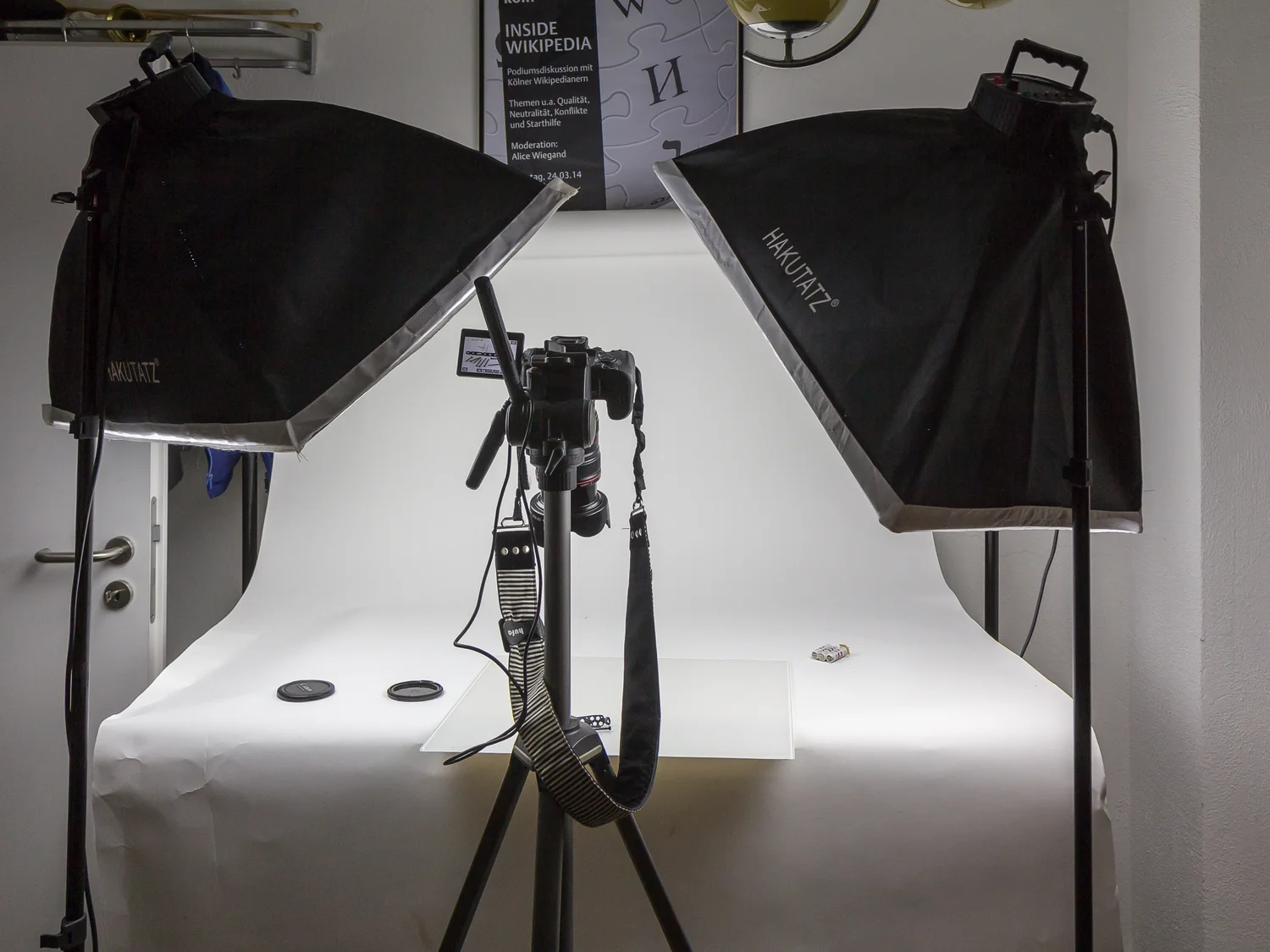
Two black lighting modifiers face inward toward a pale sweep in Raimond Spekking’s photograph of a photography setup. A camera stands between them. There is no sharp line at the back of the surface where a vertical wall should meet a horizontal tabletop. The material curves instead, leaving the small objects a place to sit against a plain background. The equipment took time to arrange in that position before the picture was made. If somebody needed the same space immediately afterward with a dark background and taller subjects, another portion of time would belong to taking much of it apart.
A studio can quote rental in hours because time is a simple way to divide access to the same space. A photographer planning a job has to turn those hours back into particular pieces of work. One of them is creating the images. Others may include carrying things into the room, checking equipment, arranging the background and restoring the studio afterward. The number of finished photographs cannot by itself describe how much of the room’s day the job is going to use. A good booking starts by saying when the crew can begin, what is ready on arrival and how the room has to be left.
Find the first minute of the booking
Suppose a fictional shop needs a set of twelve product photographs. The person who has rented space has arranged to meet the rest of the team at noon. If the contract includes access at noon, changing from street shoes, bringing in the products and preparing the first arrangement may begin then. The first useful photo might come quite a bit later. Neither side has lost time; the studio belongs to the renter while it is being made ready. Trouble starts if somebody thought they were entitled to a finished setup at noon and somebody else expected only a room with permission to enter.
The same uncertainty affects the end of the period. The technical work of making the final exposure is nicely defined. Taking down the backdrop, checking the gear and returning the space to its agreed condition also require minutes. Southwestern College makes this distinction explicit in its photography reservation guidance, putting setup, cleanup and file transfers within a studio booking. The institutional policy describes that particular facility. It illustrates why other renters should settle the status of similar tasks even if another provider uses a different arrangement.
Separate things that can be done before the clock from things that require the room. A list of products and the order to photograph them can often be prepared elsewhere. Checking the exact position of a light against a reflective object may require the actual setup. If the client has a selection decision to make before the next object goes on the table, time taken by that decision can occupy the booked space. Knowing which work needs access helps decide whether to reserve another half hour and what to finish in advance.
A room with equipment is not the same as a staffed production
The central question in a quote with gear included is which gear and in what state. A backdrop available in the building may need to be put up. A room can come with lighting stands without including the lights or a person to aim them. A backdrop a business wants to use may have conditions attached to it because finishing or cleaning it affects the next booking. A bundle can be a good fit once the renter understands which items will be available, who is allowed to use them and which parts of the work they are hiring.
Someone commissioning pictures may also mean something different by finished from the photographer. The hire could cover a room and equipment while the photographer separately prices editing, retouching and delivery of approved files. A business that compares two suppliers should look for the distinction between studio access, somebody's shooting time and the work due after leaving the space. Two figures expressed as hourly rates can describe very different services. A single rate can be easier to reason about when the invoice and the agreement say what comes with it.
The photo at Lokal K shows one practical use of lamps, a camera and a small curved background. Its arrangement would suit some needs and be hard to reuse unaltered for others. A large item might need more depth behind it; a wet item or a dusty object might change what surface is appropriate. The fact that a setup existed once for an earlier photographer does not make it ready for today's project. What can be shared is a productive question. What a different job would have to change is a separate one.
A fixed hour contains variable work
An imaginary plan has ninety minutes booked. Allow fifteen for setup, ten to make the room ready to be handed back and five to check files at the end. That leaves an hour for photographing and the changes between items. Twelve products fit into that period only if the average allotted time under those assumptions is five minutes per item. There is no reason for each item to use exactly that much. The value of the calculation is that it exposes which portions of the hour have already been promised to activities outside the shutter.
Now suppose eight products have the same size and finish. The camera position and background can remain stable for them. A change to the remaining four could require repositioning or testing equipment. Counting every object as ten identical clicks would miss that difference, even if each eventual package contains the same number of pictures. A better plan groups compatible work and assigns time to the change. It can still be too optimistic; at least the uncertain part can be identified before a more expensive minute arrives.
The other side of the booking also has an interest in time. An activity running fifteen minutes late may overlap the next crew's access. The studio might have room to extend this visit, or the next occupant might already be waiting at the door. Agree in advance how extensions are handled and what happens when a planned part of the shoot cannot be completed. The idea is to make the timing clear to both sides, not to guess how tolerant the operator of a photographed studio would be.
The needs that make two rooms hard to compare
A plainly lit product might fit well in a modest tabletop room. A shoot with larger items can require more distance between camera, object and background. A space that is inexpensive on paper might need extra time for loading, or it might already have a usable equipment arrangement that saves work. Where people need to arrive together, a confirmed path from the street or a known place to load can matter as much as a number on a rate sheet. The better reference for a comparison is the whole use of the room, including what people do once there.
A cancellation has economics as well. If an item indispensable to the job will arrive late, the lender of the room may no longer be able to offer those hours to someone else. The renter may have paid for people to travel. The relevant terms differ among places. A realistic plan confirms the parts that have to be in place before any specified deadline for a change. It also makes a difficult day easier to salvage: decide which shots can still be made if a late item does not show up immediately.
List what will go home from the session
A small business commissioning a dozen pictures might need a front view, a wider image for its own site and a close detail for each product. Another business could use one finished view per item. Both can describe the shoot as twelve products, even when the number of distinct setups and the work of editing are far apart. Make a list that names which views matter and who can decide whether to move on from them. That helps the creative team use the rented minutes on work that will actually turn into the deliverables.
The room agreement and the production agreement can then meet cleanly. The first explains when people must give back control of the space and what equipment belongs there. The second explains what will be delivered and what work is still due. Keep approval of the images separate from handing back the room: a person may be able to check what was captured while still needing time to choose or edit the files elsewhere.
Read the clock at the door
The camera in the photograph faces a setup ready enough to be documented. That image would not tell an hourly renter who put the equipment there or how long they had been arranging it. The hidden portion of the hour deserves to be made visible on a plan, because work before and after the picture competes for the same time.
A quote becomes useful when the renter can look at it and identify the first permitted minute, the last item they will photograph and what must happen before they close the door. An extra hour could buy more images. It could also buy room for a slower change or a realistic cleanup. Knowing which of those is expected gives the rate a meaning that the number alone does not convey.