When a Water Meter Meets Two Bills
A higher bill can contain water that was measured in an earlier period. The useful comparison starts with the readings, their dates and whether one was estimated.
In this story 5 sections
A person opens a water bill after a quiet month and finds a larger usage figure than they expected. They spent several days away. They have no memory of a change in the ordinary rhythm of the house. It is tempting to pick the busiest activity they can remember and ask whether it used all the extra water. First put the previous bill beside the new one. If one reading was estimated and the other came from the meter, the two documents can represent a change in the evidence the utility has about use, over more than one period.
A cumulative meter generally advances as water goes through the measured service. A bill uses readings at specified times to account for the water attributed to an interval. An estimated reading can stand in for a measurement a utility did not obtain when expected, under its applicable procedures. Seattle Public Utilities describes how an underestimated reading can leave a difference to be reflected when it next has an actual reading. Other utilities have their own terms and display methods. The arithmetic is easy to follow once you write down that the middle point is an estimate rather than a second physical observation.
Three entries tell a useful story
Take a made-up meter with readings given in consistent units. At the start of the first period the utility reads 1,000. At the ordinary end of that period suppose it uses an estimate of 1,050. Its first usage calculation is 50 units. At the end of the second period, somebody obtains a reading of 1,130. The measurement is strong evidence for the cumulative total at that point. In a simple comparison beginning at the estimate, the new period might be shown as 80 units. The pair of figures adds to 130 units of difference between the two actual outside readings.
Now suppose a reliable intermediate observation later became available and showed that the reading at the first period end had really been 1,070. It would assign 70 units to the first period and 60 to the second. The total from the first actual reading to the last still agrees. The illustration lets the second bill be higher than the first usage calculation while use in the second period was actually less than the first. This does not trace the timing of the 130 units precisely unless the missing middle evidence has been recovered. A larger calculated amount on one bill does not automatically show the house used more while that bill’s advertised dates were passing.
Keep the significance of prices apart from this comparison of readings. Two volumes that add up to a known total may be priced under different conditions. There could be different rates across the two periods, fixed service charges, tiers or other charges under the utility’s terms. The invented meter figures do not tell you which adjustments a real utility will make. A bill inquiry should get a specification of the unit, the readings used and the treatment of a correction separately. A correction to usage is a distinct piece of information from a change in the amount due.
A billing period is not always the month you remember
Two checks can differ simply because they cover more or fewer days. If the start and end date changed, a longer period might show a bigger usage quantity with a similar average per day. Take the difference between compatible readings and divide by the days in the actual interval if you want a rough daily comparison. It is still an average, not a picture of which days were active. If one of the readings was estimated, keep that uncertainty with the derived result. A long stretch between actual readings can establish a reasonable total while leaving much of its timing unresolved.
Look at units before making conversions. A utility can use an amount suitable for its meter and billing system, and other services may use a different label or reporting multiplier. A label referring to hundreds of cubic feet, for example, is not describing a figure in gallons merely because the use concerns water. A meter register and a line on the bill can be expressed differently. Check the exact definition in the utility’s material or ask how the quantities were converted. A calculation with the wrong unit can appear startlingly plausible against a single bill.
If several properties are involved, confirm that both reports concern the same account and meter reference. A change of meter can cause another kind of discontinuity that requires official information to reconcile. The two endpoints might otherwise look like an impossible drop or surge. A comparably reported address and a correctly named service matter more than having a screenshot with a very clear total at the bottom. Recover the parts of the bill that identify what was measured before comparing it to another figure.
Compare a quantity adjustment with a price adjustment
Suppose for an illustration the first interval was priced at $3 per unit and the second at $4 per unit, with no other charges in the simplified example. If 50 units were charged at the first rate and 80 at the second, the sums would be $150 and $320. If reliable evidence then assigned 70 units to the first and 60 to the second, using the same hypothetical schedule would give $210 and $240. In both versions 130 units are accounted for, yet the combined totals differ by $20. This does not say a real account will be corrected by putting those new quantities through those simple rates. It shows why the question about price must remain separate from the question about the register.
Now consider an estimate on the high side. Imagine that from an actual first reading of 1,000 there had been a provisional endpoint of 1,090, and later the actual measurement came to 1,130 just as before. The numbers assigned initially would be ninety and forty. The measured change between the actual endpoints would still be 130. In this example a much smaller-looking second bill would not establish that those households changed water use dramatically. Some of the later use had effectively already been counted in the first allocation.
If a utility maintains a fixed service charge, a quarter with fewer billed units can still carry a substantial total. A resident comparing two bills may want to place the service charge in one row and the charge for the measured quantity in another. Depending on the provider, other services on the same statement may use distinct references or conditions. Different labels are a reason to look at the definitions, not a reason to assume every amount is simply a multiplier of this one reading.
Keep a note that can survive the next bill
Imagine calling the utility at the end of the next period with two screenshots and no other information. A useful note would identify the end readings, the period each covers, the actual or estimated indicator and the precise item you want explained. Include an account number only through the appropriate service channel. The whole month’s household routine often matters less to the first question than the way a single point in the sequence was supplied. Once that point is clear, you can ask whether a pattern in actual records needs more attention.
A summary with those details can also show the difference between a calculated usage and a recorded payment. Keep dates and accounting periods beside both when comparing records from separate sources.
When an adjustment covers two periods, check that the same amount has not already been included in the comparison under another label.
What to ask if the line still seems wrong
Record the dates, readings and whether they were observed or estimated. Ask for an explanation of how the usage line was calculated and whether a correction affects it. Keep separate notes for changes in rates or recurring charges. If the issue persists across actual readings, it can be helpful to identify when the change appeared and what else changed in the period, rather than immediately assuming the same kind of estimate caused it. The utility can advise on readings, meter access and appropriate next steps for its own equipment.
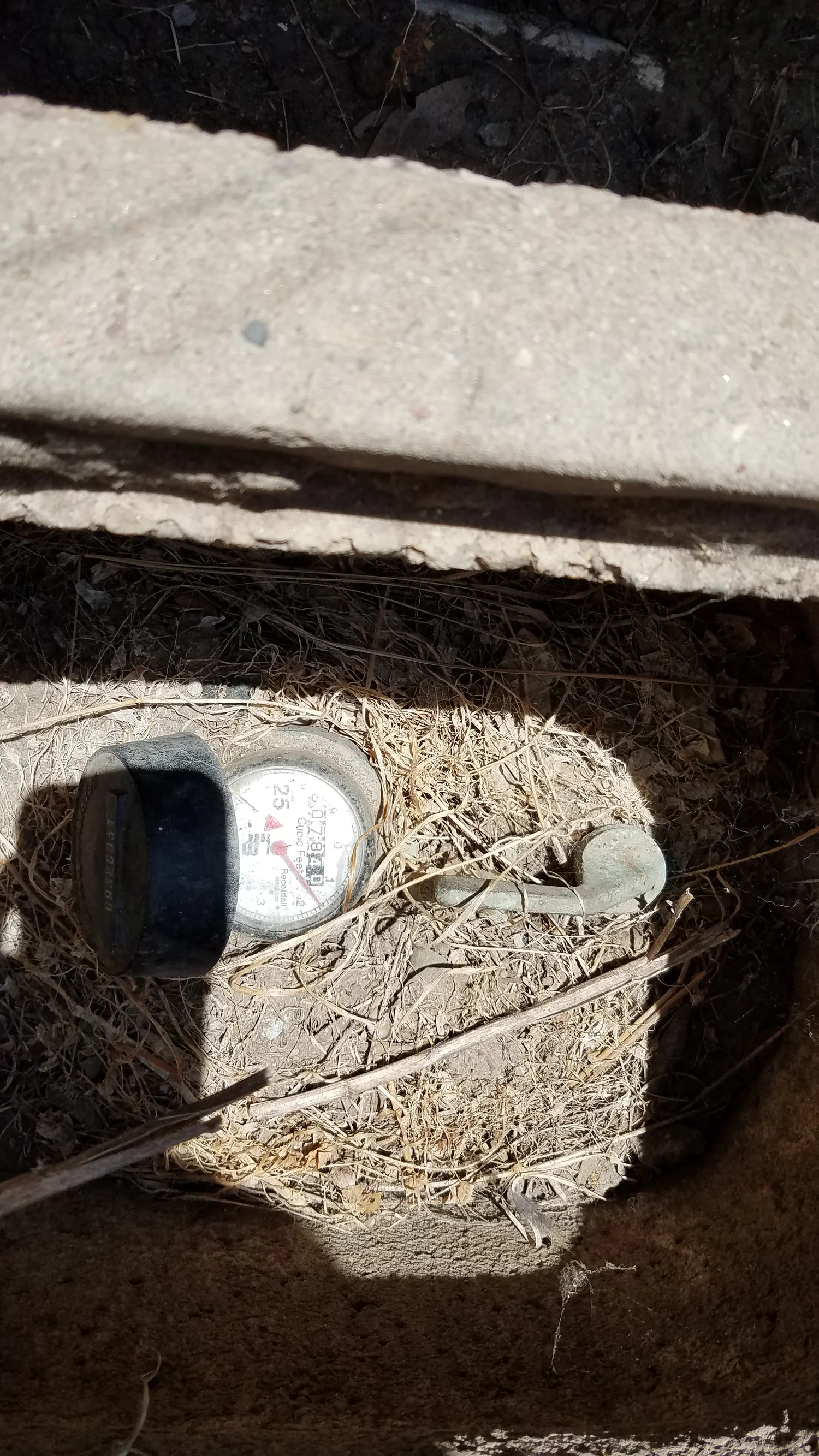
A water meter can be in a place that is not appropriate to open or inspect without guidance. The case does not need a reader to open one to understand it, just as the photo of the meter in San Diego does not say which process Seattle follows. Use the supported reading or reporting options available for the account. If someone can see a reliable customer-facing reading safely, give it its date and note how it was obtained. Do not expect a later reading taken by another person to become an exact reconstruction of water used in an earlier period.
The person who opened the large bill can now ask a better question. Was the difference due to more water across the full period of actual measurement, when the water was assigned to bills, or the price applied to it? Sometimes more than one thing changed. Separating those questions gives the reader some chance of understanding the trend without asking a single bill to contain a calendar of all the water that ever passed the meter.