Why a Small Café Might Leave Room Between Tables
Furniture shapes the speed of service, the comfort of guests and the work a café can take on. The economic case for an extra table depends on the room around it.
In this story 5 sections
A room has enough space for one more two-person table. On a drawing the furniture fits. In the room, that is where people heading for pickup have been standing. Put a table there and the available seats go up. The chance of a person navigating the entrance without stopping may go down. Both changes count, though only one can be seen by counting chair legs.
Capacity is more than the number of chairs
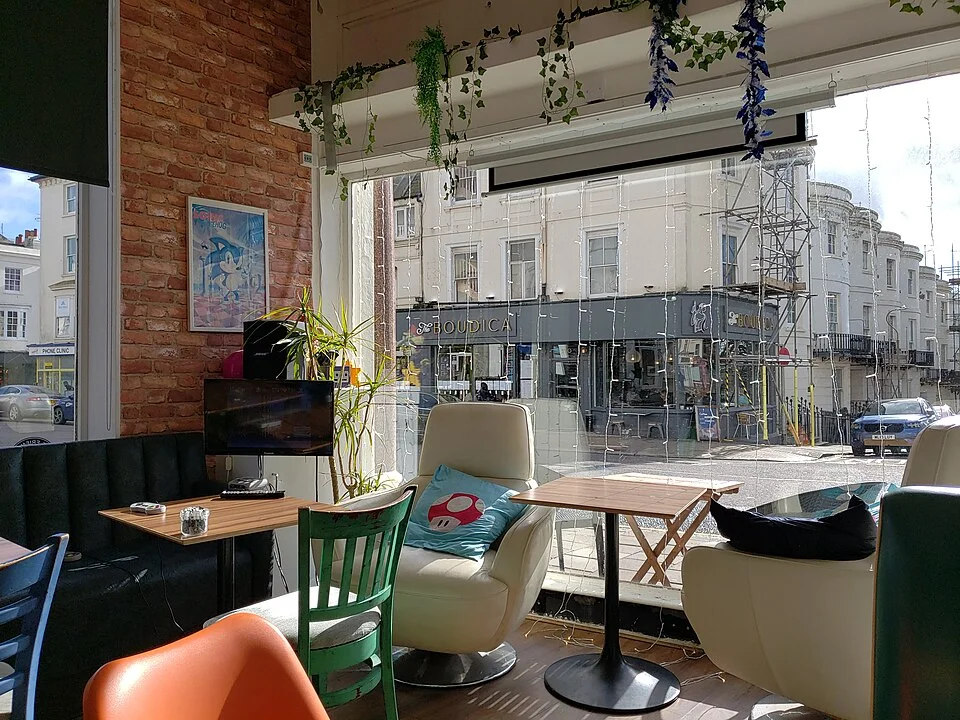
Start by following a cup from the counter to a seat and an empty cup on the return trip. A table near a bend can turn a short route into a series of small negotiations. A chair pulled back for someone to get up takes more space than the chair shown pushed in. With a coat, a bag or a mobility aid in the picture, the gap changes again. A plan that allows the seating but neglects space for reaching and leaving it has measured the furniture rather than the service.
Now include the line at the counter. A café with a lot of takeaway business makes part of its living on people being able to enter, find the queue, pay and leave. A café where most patrons sit down has a different relationship to the same piece of floor. The busiest part of the day might put both groups in the room together. A chair earns money when a customer can use it, but so can the patch of floor that allows a waiting person to get past it.
Separate contribution from revenue
Consider a deliberately simple example. One extra seated order brings in 8 units of currency and requires 3 in ingredients and other direct costs. Its contribution toward other costs is 5. That does not mean a new seat is worth 5 every minute it is available. You need to estimate how often it produces a genuinely additional order, how long someone occupies it, and whether other orders are displaced. If a layout change also requires more service hours, the margin must cover those hours as well. The break-even method is useful for sorting such assumptions; the calculation inherits their uncertainty.
A café also has expenses that do not follow ordinary orders one by one. Rent remains due during a quiet afternoon. Staffing can change in steps rather than gradually with meals sold. More table space might be valuable when the staff and equipment can support the extra work but unhelpful if the kitchen is already at its limit. Check which resource is constrained at which hour before assuming seats are the resource in short supply.
Run a small trial before buying furniture
Start with a period when the existing chairs are actually full. A new table has little effect on the number of orders served if there were usually spare seats already. Watch what happens at the first point someone cannot find a place. Do they take away their order, come back later or decide to buy nothing? An extra seat could turn some of the last group into additional orders. For somebody who would have bought an order anyway, the effect may be a change in the way the order is used or a change in what they decide to add. Count these as different possible outcomes before using every new occupied chair as proof of a new sale.
The same method answers a question about group size. A pair comes in and looks for two seats together. A person alone takes the one small table at the window. A larger party may need a combination of tables that leaves an awkward space along a route. The number of empty seats at a glance may overstate the chance of seating the group standing at the door. Changing the shape or arrangement of a couple of tables can have a larger effect than buying a third. Look at which patterns the room can serve before expecting every possible seat to be interchangeable with every other.
An owner can try a permitted and accessible arrangement temporarily, then compare similar times on ordinary days. Record the number of times a prospective customer leaves, how often the door or collection counter gets blocked, the kinds of groups that can find seats, and how long orders wait to be delivered. Make separate notes on the weather and unusual events. A beautiful photograph from opening time is a weak test for a room at its busiest.
One extra table will be right in some rooms. In another, clearer movement, outdoor visibility, a place for a stroller, or a shorter wait brings the greater return. The room is furnishing a transaction and sometimes a welcome. A useful layout counts the people who can make the whole visit as well as the people who can sit at any one moment.
Give time in the room its own line
Suppose a table serves two pairs during a busy lunch. It could serve a different number when customers take longer to finish or staff take longer to clear it. The time spent seated is only one part of the time for which the table is unavailable. Resetting it, waiting for another party to recognize it is free, or clearing a route to it can matter. A table drawn at an ideal size on paper supplies no estimate of these intervals. Measure an ordinary day in coarse units and record where there is a delay between one use and the next.
Keeping a clear route from the door may make it easier to direct a visitor to an open place quickly. A smaller table can be a more readable sign that two people have somewhere to sit than a larger cluster with uncertain edges. Conversely, a shared place may be the right size if the customers know how it is used. Looking at room turnover without asking when someone recognizes a place is free can give a false impression of lasting occupation. The visible movement between counter, door and seat gives context to the arithmetic.
This is another reason to separate revenue from room use. If a person decides to stay for a long conversation but orders the same thing they would have bought to go, the transaction can be unchanged. The use of space, and the value of that use to a person or to the café’s identity, have changed. A room meant to welcome people may make that exchange quite deliberately. Estimate the consequences during the periods that actually constrain service. A seat used slowly at a quiet time has a different opportunity cost from the same seat occupied when several groups are waiting.
Include the cost of the change you can reverse
One way to judge a new arrangement is to treat it as a trial that consumes a little staff time. Record what had to be moved, whether the route remained accessible and whether anything blocked the view of an exit, waiting area or pickup counter. Follow applicable rules and keep required passage free throughout. Before buying anything, decide what comparison would justify a permanent change. A small rise in seated orders may help if the previous arrangement left them unserved. Similar sales with easier movement and less confusion can be a good outcome too. The test needs a named outcome so that the staff can tell which difference is meaningful.
Imagine a layout that supports five truly additional orders on each of twelve similar days in a month. If those orders contribute five units of currency each before the extra fixed costs of the change, the illustrative monthly contribution is 300. A new cleaning obligation, a purchase or a persistent reduction in takeaway orders can change what remains from that amount. The arithmetic is simple enough to remember. The larger uncertainty lies in whether those additional orders really happen at all. This is why a person counting chairs and a person watching the busiest queue can produce different accounts of what a room can support.
Retain a sketch of how the busy period looked before and after. Include where orders wait, where groups decide to sit and which path remains unobstructed when chairs are pulled out. The sketch can explain the outcome to a person who was absent on trial day. It can also be a starting point when the menu, staff routines or usual customers change. A thoughtful arrangement creates enough room for the kind of visit people have come to expect, then gives the café a fair chance to serve them.
A good record also includes the days when the trial had no measurable effect. Rain can briefly increase the number of visitors keen to sit indoors. A nearby event can send larger groups into a room than it normally sees. A single quiet day can make two layouts look equally capable despite important differences during a rush. Write the conditions beside the results so that an unusual afternoon counts as evidence about that afternoon. The choice can then reflect ordinary use and meaningful exceptions separately. A flexible arrangement might handle a rare large group without committing valuable floor space to its needs on every day the café is open.
Ask the staff which part of the new movement was easiest to learn and which still needed instructions. A layout that explains its own route can save small interruptions that never appear on a bill.